
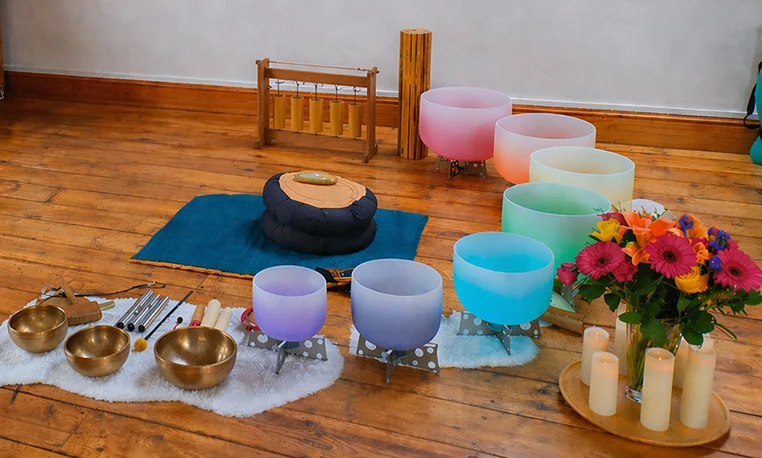
Singing bowls produce a sustained tone that is simple on the surface and surprisingly complex underneath. Strike or stroke the rim of a bowl and what begins as a single clear note opens into a layered field of harmonics that continue to evolve long after the initial contact. These sounds can invite stillness, relaxation and sometimes can move energies within the client that need to be moved.
There are two types of bowls that we use, metal bowls, often referred to as Himalayan bowls, and crystal bowls. Himalayan bowls tend to produce rich, layered tones with multiple harmonics audible simultaneously. Crystal bowls lean toward cleaner, more sustained frequencies, often quite ethereal. Neither is better; they are different, and which to use depends on the session and the person.
Working with singing bowls
In therapeutic work the bowls are played with attention to pacing, volume, and what is needed for the individual client. The aim is not simply a pleasing ambient backdrop but an instrument used purposefully with intent.
That distinction comes from clinical awareness as much as from skill with the instrument, and we both bring this to our work with bowls.
What singing bowls can support
Bowl work can support:
- relaxation and settling
- focus and attentional shifts
- emotional processing
- a sense of clarity or stillness
- embodied awareness
- nervous system regulation
- a quality of present-moment attention that can be difficult to reach through other means
Singing bowls may be encountered in both individual and group settings.
If you would like to know more about how they are used within Devon Sound Therapy, you are welcome to get in touch.