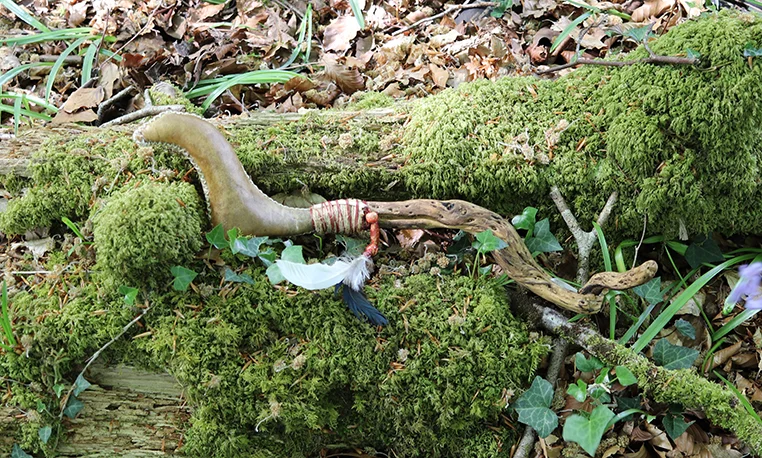
The rattle does not fill a space the way a gong does. It works through texture and pulse rather than sustained tone, and where other instruments tend to settle the body into stillness, the rattle tends to invite something to shift. It is a different kind of instrument entirely, and it requires something different from the person playing it.
It is one of the oldest instruments across many traditions, used at transitions, at openings and closings, and at moments where something static needs to shift or come loose. That is not coincidental. The rattle has always been associated with movement, with change, with the moment before something begins. In a therapeutic context, that quality of gentle activation is genuinely useful.
Working with the rattle
In one-to-one work we often use the rattle at specific moments rather than continuously, responding to what is emerging rather than setting an intention from the outset. This requires us to have an attentiveness to the session as a whole, a sense of when the rattle will help and when it might interrupt. For example, in a therapeutic drum session, we may use a rattle at times where energy needs to move or shift.
It is a humble instrument in many ways, and that understatement is part of its value. It does not demand attention the way a gong does. It does not anchor the room the way a drum does. It invites movement and allows blocked or stagnant energies to shift, and sometimes that is exactly what is needed.
What the rattle can support
Rattle work may support:
- shifts in attention and awareness
- gentle activation or movement
- emotional processing
- grounding through rhythm
- a sense of presence and engagement
- transitions between phases of a session
- gentle clearing or re-orientation
Rattles may be used in both individual and group settings.
If you would like to know more about how the rattle is used within Devon Sound Therapy, you are welcome to get in touch.